Table of Contents
- Maine Home Selling
- Which Areas in Maine Offer the Best Return on Investment and Are Easiest for Residential Property Development?
- What Home Styles, Sizes, and Features Tend to Sell Fastest in the Maine Market?
- What Should Home Sellers Know About Zoning Laws, Permits, and Regulatory Requirements in Maine?
- Which Towns or Cities in Maine Are Easiest, and Hardest, When It Comes to Navigating Real Estate Regulations?
- What Are the Most Effective Flipping and Resale Strategies for Maximizing Profit in Maine's Housing Market?
- How Should Sellers Price Their Homes to Attract Buyers While Maximizing Value in Maine?
- Which Key Economic, Social, and Regulatory Factors Are Driving Current Trends in Maine's Local Property Markets?
Maine Home Selling
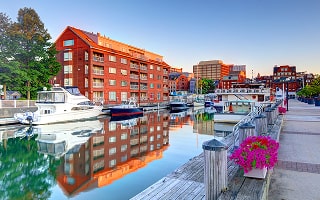
While more homes are being listed on the Maine property market, inventory remains low, and prices continue to rise. The median home price in the Pine Tree State jumped 9.3% year over year to an all-time high of $427,100, just shy of the roughly $440,000 national median.
Across the state, homes tend to sell in about 35-45 days. During the off-season (November-February), homes spend significantly more days on market (DOM), with demand typically peaking in June or July. Maine also has a highly localized real estate market, with certain cities, like Portland and South Portland, seeing stronger demand and faster sales.
Despite significantly more homes for sale in the state (+26% year over year in October 2025), demand continues to outpace available supply. Though the current average of 3 months of supply is an improvement compared with previous lows, Maine's housing market still favors sellers.
Property tax rates in Maine are around 1.10%, ranking it 18th highest in the country. While this rate exceeds the national average of around 0.90%, it remains considerably more attractive than neighboring New Hampshire's effective average of around 1.77%.
Foreclosures in Maine also exceed the national average, occurring at a rate of 1 in every 4,218 housing units (as of October 2025). Counties where foreclosures are more common include Sagadahoc, Waldo, and Penobscot, indicating economic instability and the potential for more housing market volatility.
Which Areas in Maine Offer the Best Return on Investment and Are Easiest for Residential Property Development?

Maine's strong tourist appeal and growing economy make it a promising place for real estate investment, with potential for high return on investment (ROI). With a mix of local economic growth, coastal views, urban centers, and natural beauty, each municipality and neighborhood in the Pine Tree State offers varying attractions for individuals looking to invest in the state's housing market.
One of the key attractions for real estate development and investment in Maine is the state's mandate requiring every municipality to permit at least one accessory dwelling unit (ADU) on single-family lots and, in other places, 2-4 units per lot. While each Maine locality has unique investment potential, the following areas in the state may be uniquely positioned for residential property development and solid ROI prospects:
-
Portland: Portland has a strong renter pool (short- and long-term) due to its inclusionary zoning and diverse economy, with growing sectors like education, tourism, and healthcare. Its steady population growth and strong rental demand make it appealing for real estate investors looking to generate consistent rental income.
-
Bangor: This city has a clear focus on downtown infill and other efforts aimed at adding home supply to meet housing needs and reduce market barriers for diverse housing development types.
-
Augusta: As the state capital, Augusta is recognized as an attractive place for real estate investment, particularly long-term rental properties. Rental demand remains high in the city thanks to a stable job market and diverse local economy, supported by industries such as government, healthcare, and education.
-
Biddeford: The Pepperell Mill redevelopment transformed the city's downtown into a thriving mixed-use center, making it appealing to real estate developers and investors. The city typically sees steady tenant demand and strong property appreciation thanks to its local economy and vibrant arts and culture scene.
-
Saco: Home to about 20,000 residents, this town's consistent population growth over the last decade makes the local real estate market attractive for investors focused on appreciation. In addition, its waterfront location along the Saco River and Saco Bay provides added value relative to landlocked cities.
-
Lewiston: With a more affordable entry point and diverse local economy, Lewiston attracts individuals looking to invest with less initial capital.
-
Kennebunkport: Known for its historical significance and high annual tourist turnover, this village is a prime location for investors seeking strong rental incomes.
-
Old Orchard Beach: Properties in this area may offer the potential to appreciate quickly while generating solid cash flows. In addition, the town sees strong demand for short-term rentals, especially during the spring and summer.
-
Kittery: Lately, property values have appreciated significantly in Kittery, offering the potential for an attractive ROI. The town's proximity to the southern coast and Portsmouth Naval Shipyard also creates both short- and long-term rental demand for buy-and-hold investors.
What Home Styles, Sizes, and Features Tend to Sell Fastest in the Maine Market?

Although market trends may cause fluctuations, it takes around 35-45 days to sell a typical home in Maine. Some factors impacting home sale timelines in the state include the location of a property, its condition, the time of the year, the type of property, and supply and demand in the local market.
Generally, homes that tend to sell faster in Maine have one or more of the following features or characteristics:
-
![]() Bedrooms: 2-3 bedroom homes with at least 2 bathrooms tend to sell faster in Maine. For instance, in Biddeford, renovated 2- and 3-bedroom compact homes and mill lofts in walkable areas typically sell quickly. Similarly, 2- and 3-bedroom single-family homes and condos near downtown Portland often sell within just a few days. These types of homes also remain in high demand by downsizers, first-time buyers, and small families in other areas, including Bangor and Saco.
Bedrooms: 2-3 bedroom homes with at least 2 bathrooms tend to sell faster in Maine. For instance, in Biddeford, renovated 2- and 3-bedroom compact homes and mill lofts in walkable areas typically sell quickly. Similarly, 2- and 3-bedroom single-family homes and condos near downtown Portland often sell within just a few days. These types of homes also remain in high demand by downsizers, first-time buyers, and small families in other areas, including Bangor and Saco.
-
![]() Size and Lot: Homes measuring between 1,200-1,800 square feet on 0.25- to 0.5-acre lots tend to sell more quickly than oversized homes on larger lots because they're easier to maintain. In addition, these homes easily qualify for many mortgage types, leading to faster sales in places like Lewiston and Auburn, where they're in high demand by working families. Furthermore, homes under 1,800 square feet near Colby College in Waterville typically experience higher turnover, while mid-sized homes around government offices and services in Augusta tend to move quickly.
Size and Lot: Homes measuring between 1,200-1,800 square feet on 0.25- to 0.5-acre lots tend to sell more quickly than oversized homes on larger lots because they're easier to maintain. In addition, these homes easily qualify for many mortgage types, leading to faster sales in places like Lewiston and Auburn, where they're in high demand by working families. Furthermore, homes under 1,800 square feet near Colby College in Waterville typically experience higher turnover, while mid-sized homes around government offices and services in Augusta tend to move quickly.
-
![]()
Style: While there are several architectural home styles across Maine, some of the fastest-selling styles in the state are Cape Cod, ranch, and Craftsman. With the accessibility of single-level living, ranch-style homes are usually snapped up quickly in South Portland. In places like Kittery, coastal Cape Cod-style homes are generally in high demand, while traditional capes sell more quickly in downtown Biddeford.
Many retirees and seasonal residents in Ellsworth are drawn to both ranches and Cape Cods, making them some of the fastest-selling home styles in the city. Near the waterfront in Rockland, historic homes and Craftsman cottages are popular, generating strong buyer interest and quick sales.
-
![]() Modern Upgrades: Home upgrades such as updated bathrooms, open-concept kitchens, new flooring, energy-efficient systems and appliances, heat pumps, and good curb appeal make homes sell much faster than those requiring renovations. For instance, 3-bedroom homes with modern upgrades, such as updated, open-concept kitchens, are in high demand by young professionals in Bangor, while homebuyers in Portland mostly prefer to purchase turnkey condos with modern finishes over dated units. Similarly, homes with energy-efficiency upgrades and open kitchens typically sell more quickly in places like Scarborough.
Modern Upgrades: Home upgrades such as updated bathrooms, open-concept kitchens, new flooring, energy-efficient systems and appliances, heat pumps, and good curb appeal make homes sell much faster than those requiring renovations. For instance, 3-bedroom homes with modern upgrades, such as updated, open-concept kitchens, are in high demand by young professionals in Bangor, while homebuyers in Portland mostly prefer to purchase turnkey condos with modern finishes over dated units. Similarly, homes with energy-efficiency upgrades and open kitchens typically sell more quickly in places like Scarborough.


What Should Home Sellers Know About Zoning Laws, Permits, and Regulatory Requirements in Maine?

To ensure smooth sales, avoid legal issues, and maximize ROI in Maine's real estate market, you need to be aware of local zoning laws, permits, and key regulatory requirements. While zoning laws control how properties in a locality may be used, permits are typically required for renovations, new construction, and any changes in a building's use.
When shopping for a home in Maine, buyers may request a Certificate of Compliance (COC) to confirm that a property complies with all land use laws and local zoning rules. It's typically issued after an inspection and indicates that a property is safe and up to code. As a result, for sellers without a COC, home sales may be slower or more difficult.
Maine is generally categorized into the following areas in relation to zoning laws, permitting, and local regulatory requirements:
-
Areas with strict zoning laws: These areas typically restrict lot size, density, or multifamily development and often enforce relatively rigid land-use codes. ROI in these municipalities often relies on longer-term property appreciation rather than rapid multifamily redevelopment.
In Maine, these areas include Falmouth, where large minimum lot sizes are enforced in suburban neighborhoods, and Cape Elizabeth, where there are strict limits on density, particularly near coastal areas. In Yarmouth, there's limited multifamily zoning and careful growth management. When investing in any of Maine's stricter regulatory environments, you may be faced with fewer exit strategies unless you pursue zoning variances.
-
Areas with less bureaucratic zoning laws: These municipalities are known for their flexible ordinances, which permit ADUs and more multiunit housing by-right permissions. They're the most developer-friendly areas, especially for adaptive reuse, accessory units, and multifamily development, and are the best for ground-up developers and cash-flow investors.
Maine municipalities with less bureaucratic zoning laws include Bangor, with simplified permitting for multifamily developments, and Lewiston, which encourages infill development and higher density in urban neighborhoods. Similarly, while zoning is streamlined to support infill housing in Wesbrook, there are aggressive pro-housing zoning reforms in Auburn, including missing-middle housing by right.
-
Areas requiring a special permit: In Maine, these areas are generally suitable for developers and investors who are able to successfully navigate community input processes. Projects here often require a conditional use permit, which demands public hearings. While the process of getting approvals may lengthen timelines, it usually increases project value, opening opportunities for patient developers.
These areas include Sanford, where mixed-use proposals and larger multifamily developments typically require board review, and South Portland, where several conditional uses, like large multifamily near residential zones, require Zoning Board hearings. Furthermore, special approvals must be obtained in Brunswick for conversions or certain higher-density proposals near Brunswick Landing.
-
Areas requiring a Certificate of Occupancy (CO) before legal occupation: A CO typically provides buyers with protection by certifying code compliance before taking ownership of a property. While it's technically required before legal occupation in most municipalities in Maine, some areas enforce it more rigidly than others. Such places include Bangor, which mandates a CO before occupancy or rental registration, and Portland, where a CO is strictly required for all major rehabs and new builds. Similarly, CO enforcement is consistent in Westbrook, especially for new apartment complexes, while in Lewiston, new residential and rental conversions require a CO.
-
Areas requiring approval of a historic commission: Certain buildings and homes located in designated districts in these areas generally require commission approval for material changes, exterior work, or redevelopment. For instance, material and design approvals are needed in historic districts in York Village, while all changes in the West End, downtown, and Munjoy Hill districts of Portland are overseen by the Historic Preservation Board.
Similarly, all exterior work in the historic downtown of Rockland must be reviewed by the Historic Preservation Commission. While there are notable barriers to development in these areas (projects typically move slowly and are more costly), they also hold the potential for yielding premium rental and resale values due to preserved charm and limited inventory.
Which Towns or Cities in Maine Are Easiest, and Hardest, When It Comes to Navigating Real Estate Regulations?

Staying compliant with local regulatory requirements helps facilitate smooth real estate transactions, minimize risks, and prevent legal issues or costly delays, while also maximizing property value.
To successfully navigate Maine's real estate regulations, it's essential to understand the prevailing regulatory climates in each area, which are generally categorized as follows:
Development-Friendly Areas

These areas comply with Maine's LD 2003 and have streamlined zoning that encourages housing growth. As a developer, you may leverage streamlined permitting (remember to consider parking rules and density caps), while as a seller, you should consider emphasizing the potential for ADUs and multiunit redevelopment when marketing. Areas with development-friendly regulatory climates in Maine include the following:
- Biddeford: Pro-housing zoning supports mill district redevelopment.
- Lewiston: Offers affordable entry costs and encourages multifamily and infill redevelopment.
- Westbrook: Zoning supports the Rock Row mixed-use development and infill housing.
- Bangor: Simplified permitting focuses on promoting multifamily housing supply in its downtown.
- Auburn: Zoning reforms in this city generally permit missing-middle housing with fewer variances.
Moderately Regulated Areas

While development or growth is possible and encouraged in these areas, many projects still require board review. Properties with zoning compliance or pre-approved permits in these places typically have premium values. Investors can also build community support by adhering to town/city master plans. In addition, you should plan for public hearing timelines, which may extend investment holding times. Municipalities where regulatory climates are moderately regulated in Maine include the following:
- Sanford: Zoning Board approval is required for mixed-use or larger multifamily projects.
- Waterville: Encourages downtown revitalization, but projects near historic districts are typically carefully reviewed by the Historic Preservation Commission.
- Augusta: While the city adopts board reviews for larger projects, it largely supports and encourages housing growth.
- South Portland: Though some by-right projects exist in South Portland, conditional use permits are generally the order of the day.
Highly Restrictive or Bureaucratic Areas
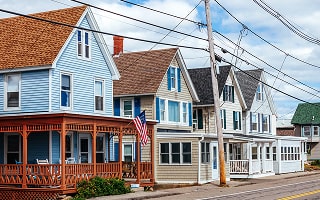
Multiple layers of approval are usually required in these areas, which often resist high-density housing. In addition, they're known for enforcing large lot minimums, strict zoning, and/or historic preservation overlays. Developers in these areas should expect conservation reviews, long approval windows, and variances. For sellers, marketing properties as luxury or legacy homes may be an effective strategy. In Maine, these areas include the following:
- York: There is strict coastal and historic zone oversight in this town.
- Falmouth: Residential zoning is dominated by large lot requirements.
- Cape Elizabeth: There are tight density limits and restrictions on the development of shorelines.
- Kennebunkport: Waterfront and village properties often require design and historic approvals.
- Yarmouth: This town has strong controls on multifamily growth and subdivision.
Regulatory Climate Factors

The real estate industry is generally faced with increasing regulations, including stricter building standards, which determine how difficult or easy it is to develop new buildings, renovate existing property, and flip a property. Like everywhere else, the regulatory climate in Maine differs by location and can impact home values, supply, and demand.
The table below lists the principal regulatory climate factors in Maine, their impact on real estate development, and a few of the local areas where they're commonly found:
Factor |
Impact on Development |
Where It's Found |
|---|---|---|
Zoning Flexibility |
Determines ease of land use |
Bangor, Lewiston, Biddeford, Sanford, Augusta, South Portland, and Portland |
Historic Preservation Laws |
Adds restrictions |
Portland, Brunswick, Bath, York, Camden, Kennebunk, Rockland, and Wiscasset |
Wetlands/Conservation |
Limits buildable land |
Freeport, York, Topsham, Wells, Cape Elizabeth, Saco, and Falmouth |
Inclusionary Zoning |
Requires affordable units |
Lewiston, Biddeford, Waterville, Westbrook, Sanford, Brunswick, South Portland, and Augusta |
Building Code Enforcement |
Affects cost/speed |
Westbrook, Saco, Portland, Waterville, Bangor, and Biddeford |
Local Politics/NIMBYism* |
Blocks or delays projects |
Yarmouth, Camden, Scarborough, Cape Elizabeth, York, Cumberland, Falmouth, North Yarmouth, and Kennebunkport |
*NIMBYism - Not in My Backyard
What Are the Most Effective Flipping and Resale Strategies for Maximizing Profit in Maine's Housing Market?

Investors looking to maximize profit from flipping and reselling residential property in Maine must study current market trends, acquire properties strategically, and focus on renovations that attract potential buyers. House flipping is one of the most common investment strategies, and consists of investors purchasing undervalued residential properties, renovating them, and reselling them for a profit. While traditional house flipping works in many markets, there are several other flipping and resale strategies investors can use to potentially maximize ROI.
-
![]()
Target Distressed or Foreclosed Homes: This strategy focuses on acquiring distressed properties, short sales, foreclosed homes, and REOs, which are typically sold at discounted price, to maximize profits. This strategy works best in Maine municipalities with older housing stock, such as Biddeford and Lewiston. In addition, Waterville offers flippers distressed multifamily opportunities, while there are several foreclosures and distressed property sales in certain areas of Bangor.
-
![]()
Use the 70% Rule [Maximum Offer = (ARV x 70%) - Repair Costs]: This strategy is recommended in markets where holding times or costs may be less predictable. It advises investors to offer no more than 70% of the after-repair value (ARV) of a property minus renovation costs, helping protect profit margins. In Maine, the 70% rule is best used in places like Portland, Brunswick, Scarborough, and Cape Elizabeth.
-
![]()
Try Wholetailing for Speed: This strategy is effective in Maine's hot suburban or coastal markets, like Saco, Biddeford, Falmouth, Westbrook, and Yarmouth, where minor fixes appeal to millennial buyers and make homes appear move-in ready. Wholetailing generally involves making light cosmetic updates to flips before quickly reselling them for a profit.
-
![]()
Build Strong Deal Pipelines with Lead Gen: This strategy involves pursuing steady flip opportunities using online ads, direct mail, and agent networking. It works well in places where there's high investor demand for steady pipelines, affordable homes with motivated sellers, and a consistent supply of distressed properties. In Maine, such areas include Bangor, Lewiston, Sanford, Augusta, and Auburn.
-
![]()
Renovate with Quality, Don't Cut Corners: This strategy requires investors to do more than basic cosmetic renovations on flips. The best areas in Maine for this strategy include Portland, where buyers demand stylish, modern upgrades; Camden, where historic charm requires expert restoration; and Cape Elizabeth, where most potential homebuyers expect premium quality.
-
![]()
Implement the BRRRR Method (Buy, Rehab, Rent, Refinance, Repeat): The BRRRR method works best in Maine municipalities with affordable homes and stable rental demand. Such areas include Waterville, which has high rental demand from Colby College; Biddeford, where mill redevelopments support a growing rental market; and Bangor, where there's increasing and stable rental demand near hospitals and universities. This strategy enables you to build equity and long-term cash flow by renovating, renting out to reliable tenants, then refinancing to pull out equity and fund the purchase of additional investment properties.
-
![]()
Try Micro-Flipping (Digital Wholesaling): This flipping strategy typically involves using digital platforms to quickly flip properties without renovating them. It works well in places with distressed inventory, high investor activity, and strong rental demand. In Maine, such areas include Lewiston, Bangor, Biddeford, and Auburn.
-
![]()
Go Beyond Cosmetic Work (Value-Add Flipping): This strategy involves buying a house and making structural upgrades or significant renovations before putting it up for sale. Examples include single-family to duplex conversions (if permitted by zoning), adding extra units, or finishing a basement or attic. Some of the best places to adopt this flipping method in Maine include Waterville, Portland, South Portland, and Biddeford.
-
![]()
Use Auction and Off-Market Buying Strategies: This flipping strategy generally involves purchasing properties via sheriff sales, courthouse auctions, or off-market deals at deeply discounted prices, then selling them for a healthy profit margin. It's often effective in Maine municipalities with regular sheriff and foreclosure sales and affordable auction opportunities, such as Lewiston, Auburn, Sanford, Bangor, and Augusta.
-
![]()
Explore Creative Financing and Seller Financing: With this strategy, you can bypass strict bank lending and acquire distressed properties quickly with less upfront cash. It tends to work best with equity-rich sellers in Maine's slower-moving rural markets, such as Sanford, Farmington, Rumford, and Skowhegan.
-
![]()
Invest in Tax Liens or Tax Deeds: This flipping strategy may be used in areas with regular tax-lien sales, active municipal auctions, and municipalities with consistent tax deed opportunities. In Maine, these areas include Auburn, Waterville, Lewiston, and Bangor.
-
![]()
Target FHA 203(k) Buyers: This strategy is best used in places with many FHA buyers and a steady supply of starter homes needing updates. In Maine, these areas include Biddeford, Lewiston, Bangor, and Sanford. The FHA 203(k) loan allows homebuyers to finance the purchase of a home and renovation costs in a single loan (within certain limits). As an investor, you must be able to rehab and price flips to appeal to FHA-approved borrowers, especially by making them affordable and move-in ready.
-
![]()
Stage and Price Strategically: With professional staging and strategic pricing, you may be able to boost sales speed, especially in competitive and high-demand markets, particularly those with luxury buyers. In Maine, such housing markets include Yarmouth, where staged homes appeal to families, and Kennebunkport, where professional staging makes premium homes stand out. This strategy may also be adopted in places like Cape Elizabeth, Portland, and Scarborough.


How Should Sellers Price Their Homes to Attract Buyers While Maximizing Value in Maine?

To attract buyers and maximize the value of real estate in Maine, you must learn how to price your listing in a way that balances value with local market conditions. Typically, working closely with a local appraiser or real estate agent to analyze listed homes and recently sold comps in a market within the last 90 days will help determine the appropriate list price for your home.
Some pricing strategies to consider when listing a home on Maine's property market are listed below:
-
![]() Pricing Just Below Below Market Thresholds: This requires setting prices just under certain market cutoffs, for instance, $399,000 instead of $400,000, to attract buyers searching for homes within a particular budget. In Maine, this strategy is best used in competitive markets where threshold pricing keeps listings attractive, or where buyers are especially price-sensitive. Such places include Lewiston, Augusta, Portland, and Bangor.
Pricing Just Below Below Market Thresholds: This requires setting prices just under certain market cutoffs, for instance, $399,000 instead of $400,000, to attract buyers searching for homes within a particular budget. In Maine, this strategy is best used in competitive markets where threshold pricing keeps listings attractive, or where buyers are especially price-sensitive. Such places include Lewiston, Augusta, Portland, and Bangor.
-
![]() Charm Pricing (Psychological Pricing): Charm pricing works especially well in suburban and mid-tier markets. This strategy involves pricing a home in a way that creates the perception of a good deal, typically by setting prices ending with 900s, for instance, $279,900 or $349,900. It's often effective in markets with budget-conscious families, and in neighborhoods where buyers are motivated by affordability signals. In Maine, these areas include Sanford, Waterville, Biddeford, and Auburn.
Charm Pricing (Psychological Pricing): Charm pricing works especially well in suburban and mid-tier markets. This strategy involves pricing a home in a way that creates the perception of a good deal, typically by setting prices ending with 900s, for instance, $279,900 or $349,900. It's often effective in markets with budget-conscious families, and in neighborhoods where buyers are motivated by affordability signals. In Maine, these areas include Sanford, Waterville, Biddeford, and Auburn.
-
![]() Pricing to Create a Bidding War: The strategy involves listing a home slightly below market value to spark multiple offers. It works best in areas where low inventory and high demand trigger offers above the asking price. It's especially effective in places where family and luxury homes are in high demand, and where buyers generally compete for limited listings. These include Yarmouth, Falmouth, Portland, Cape Elizabeth, and Scarborough.
Pricing to Create a Bidding War: The strategy involves listing a home slightly below market value to spark multiple offers. It works best in areas where low inventory and high demand trigger offers above the asking price. It's especially effective in places where family and luxury homes are in high demand, and where buyers generally compete for limited listings. These include Yarmouth, Falmouth, Portland, Cape Elizabeth, and Scarborough.
-
![]() High-Anchor Pricing (Test the Waters): High-anchor pricing works by listing at the top of the market range to test buyer interest, then negotiating or reducing the price as needed. In Maine, this strategy is sometimes adopted in luxury markets that support premium asking prices, and in places with higher-end homes, such as Bar Harbor, Rockland, Ogunquit, and Kennebunkport.
High-Anchor Pricing (Test the Waters): High-anchor pricing works by listing at the top of the market range to test buyer interest, then negotiating or reducing the price as needed. In Maine, this strategy is sometimes adopted in luxury markets that support premium asking prices, and in places with higher-end homes, such as Bar Harbor, Rockland, Ogunquit, and Kennebunkport.
-
![]() Price-Per-Square-Foot Benchmarking: This is a good strategy to employ in areas with similar housing stock and where investors generally compare multifamily values by the price per square foot, such as Lewiston, Auburn, Augusta, and Bangor. It works by pricing a home using local dollar-per-square-foot averages to stay competitive in the housing market.
Price-Per-Square-Foot Benchmarking: This is a good strategy to employ in areas with similar housing stock and where investors generally compare multifamily values by the price per square foot, such as Lewiston, Auburn, Augusta, and Bangor. It works by pricing a home using local dollar-per-square-foot averages to stay competitive in the housing market.
-
![]() Appraisal-Backed Pricing: Appraisal-backed pricing is useful in conservative markets where lenders scrutinize deals and where financing is contingent on appraisal values. It uses a pre-listing appraisal or estimated appraised value to set the list price. In Maine, such markets include Brunswick, Ellsworth, Orono, Bath, and Skowhegan.
Appraisal-Backed Pricing: Appraisal-backed pricing is useful in conservative markets where lenders scrutinize deals and where financing is contingent on appraisal values. It uses a pre-listing appraisal or estimated appraised value to set the list price. In Maine, such markets include Brunswick, Ellsworth, Orono, Bath, and Skowhegan.
-
![]() Net-to-Seller Pricing: This strategy is popular in places where downsizing sellers want a guaranteed take-home amount, and in areas where retiring homeowners need to get clear net proceeds. It involves setting a price that guarantees the seller's desired net proceeds after fees, taxes, and commissions. In Maine, areas where net-to-seller pricing may work well include Waterville, Sanford, Brewer, Augusta, and Bangor.
Net-to-Seller Pricing: This strategy is popular in places where downsizing sellers want a guaranteed take-home amount, and in areas where retiring homeowners need to get clear net proceeds. It involves setting a price that guarantees the seller's desired net proceeds after fees, taxes, and commissions. In Maine, areas where net-to-seller pricing may work well include Waterville, Sanford, Brewer, Augusta, and Bangor.
-
![]() Urgency Pricing (Motivated Seller Strategy): This involves setting a discounted rate for a property to be able to sell it quickly, typically due to pre-foreclosure pressure, divorce, relocation, or distress. In Maine, it works well in places where investors readily scoop up discounted properties and areas with a limited buyer pool, such as Rumford, Caribou, Skowhegan, and Millinocket.
Urgency Pricing (Motivated Seller Strategy): This involves setting a discounted rate for a property to be able to sell it quickly, typically due to pre-foreclosure pressure, divorce, relocation, or distress. In Maine, it works well in places where investors readily scoop up discounted properties and areas with a limited buyer pool, such as Rumford, Caribou, Skowhegan, and Millinocket.


The table below highlights the relevant strategies you can adopt to attract buyers and help maximize your home's sale price in Maine, depending on the prevailing market conditions within each local housing market:
Market Condition |
Best Strategy |
|---|---|
Seller's Market |
Underpricing for a bidding war |
Buyer's Market |
Charm pricing or net-to-seller |
Unique, luxury home |
High-anchor + value justification |
Entry-level home |
Just below threshold |
Urgent sale needed |
Aggressive urgency pricing |
Flipper or investor listing |
Appraisal-backed or price-per-square-foot |
Which Key Economic, Social, and Regulatory Factors Are Driving Current Trends in Maine's Local Property Markets?

Maine's local property markets are influenced by various factors, which generally determine or drive demand, supply, property values, and investment trends. A clear understanding of such factors may help home sellers, buyers, investors, and developers make informed financial decisions and adapt to market changes.
The major factors shaping Maine's local housing markets include the following:
![]() Economic Factors
Economic Factors
 Economic Factors
Economic factors like income levels, employment, and local industry shifts typically influence rents, demand, property appreciation, and pricing in Maine. For instance, redevelopment and a creative economy are fueling housing demand in Biddeford, while affordability and manufacturing revival are attracting real estate investments in Lewiston. Similarly, rental demand is high in Portland, where tech, finance, and healthcare employers continue to attract many young professionals.
![]() Demographic and Social Factors
Demographic and Social Factors
 Demographic and Social Factors
The state's housing market is greatly influenced by demographic and social factors like population shifts, migration trends, and increased household formation, which generally fuel housing demand. For instance, in Orono, the student population from the University of Maine drives rental demand and small multifamily markets. Furthermore, Bar Harbor typically attracts retirees and seasonal residents seeking vacation homes, while the stable population of retirees and government employees in Augusta supports consistent housing demand in the capital.
![]() Regulatory and Legal Framework
Regulatory and Legal Framework
 Regulatory and Legal Framework
Housing development is often constrained in some parts of Maine due to restrictive zoning and cumbersome approval processes. However, in other areas, housing growth is encouraged by zoning reforms and supportive local governments. For instance, while affordable, transitional zoning supports investor activity in Sanford, strict zoning, which typically preserves exclusivity, limits supply in Cape Elizabeth.
![]() Taxation and Fiscal Policy
Taxation and Fiscal Policy
State policies, property taxes, and government incentives generally affect housing affordability and investor appetite in different parts of Maine. For instance, lower property taxes in Augusta and Lewiston appeal to budget-conscious buyers, first-time owners, and investors.
![]() Infrastructure and Development Trends
Infrastructure and Development Trends
 Infrastructure and Development Trends
Infrastructure upgrades, such as new construction, transportation, amenities, broadband, and urban renewal projects, typically boost property values in Maine and attract development. For instance, the major downtown redevelopment in Westbrook is increasing residential growth, while waterfront and cultural investments in Rockland have made the city a growing housing hub.
While the Maine housing market is edging toward a balanced market, it continues to favor sellers with just 3 months of supply. Though the number of homes for sale and the pace of new construction in the state increased in 2025, the housing deficit remains significant due to strong buyer demand. Nevertheless, there are plenty of opportunities for real estate investors seeking appreciation-driven returns and short- and long-term rental income. Some of the best places in the state for real estate investment include Biddeford, Augusta, Portland, and Bangor. Investors and developers who align with Maine LD 2003 Guidance and target growing markets with job or amenity anchors may be able to tap into meaningful absorption and ROI potential. The major factors driving the current housing market trends in the state include economic factors, regulatory factors, social shifts, and infrastructure developments.
Table of Contents
- Maine Home Selling
- Which Areas in Maine Offer the Best Return on Investment and Are Easiest for Residential Property Development?
- What Home Styles, Sizes, and Features Tend to Sell Fastest in the Maine Market?
- What Should Home Sellers Know About Zoning Laws, Permits, and Regulatory Requirements in Maine?
- Which Towns or Cities in Maine Are Easiest, and Hardest, When It Comes to Navigating Real Estate Regulations?
- What Are the Most Effective Flipping and Resale Strategies for Maximizing Profit in Maine's Housing Market?
- How Should Sellers Price Their Homes to Attract Buyers While Maximizing Value in Maine?
- Which Key Economic, Social, and Regulatory Factors Are Driving Current Trends in Maine's Local Property Markets?